Do Microcredentials Actually Help? Here Is the Data
Coursera’s 2026 Micro-Credentials Impact Report surveyed 3,500 students, employers, and higher education leaders across seven countries. Inside Higher Ed covered the findings in June.
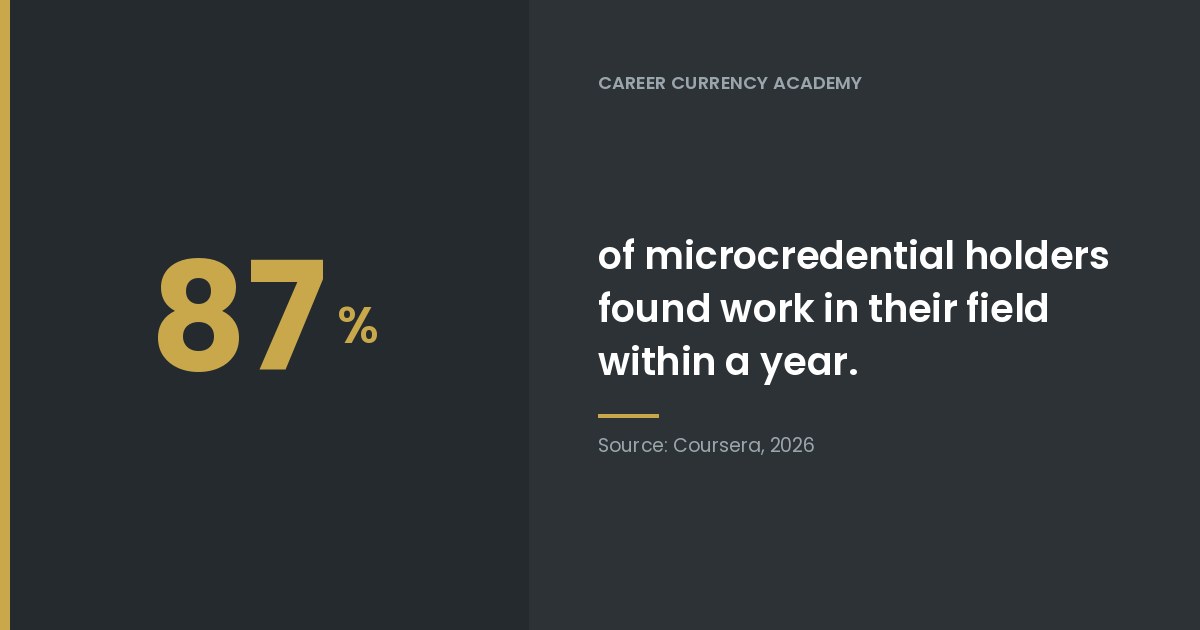
The headline numbers are strong. 87% of graduates holding microcredentials reported securing a job in their field within a year. 83% of employed graduates said the credential was a significant factor in getting hired. 94% of employers said they’re inclined to offer higher starting salaries to candidates who have them, and 92% said entry-level workers with microcredentials perform better in their first year.
Before treating any of that as settled, note who ran the study. Coursera sells microcredentials. That doesn’t make the data wrong, but it earns a raised eyebrow.
One finding buried inside the report is more useful than the headline anyway. Graduates with credit-bearing credentials were far more likely to receive raises of 10% or more than graduates with non-credit-bearing ones. In the United States, 70% of students said they’d pursue a microcredential carrying a formal credit recommendation, compared to 19% without one. The market is already sorting these. Not all badges are equal, and students can tell.
The practical guidance for families is fairly simple.
A microcredential is a supplement, never a substitute. It works when it’s specific, industry-recognized, and demonstrably applied to something. A certificate on a resume proves your student finished a course. A certificate plus a project where they used the skill proves they can do the work, and only one of those gets anybody hired.
A credential nobody in the target industry recognizes is a coupon for a store that doesn’t exist.
Pick the one the employer named, then go use it on something real.
Career Currency Academy shows students how to turn any credential into evidence.
See the Full System