She Mailed Her Resume. It Worked
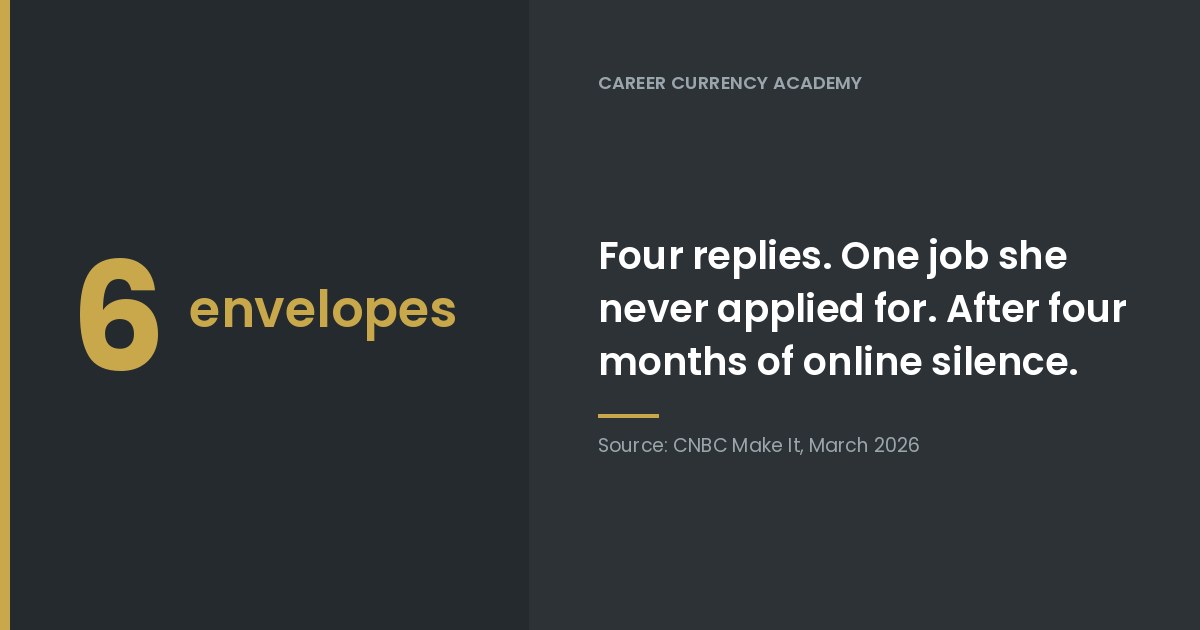
Camille Manaois spent four months applying for jobs the normal way. LinkedIn, job boards, company websites, even a paid premium account. She got nothing back.
So she bought envelopes and stamps and mailed her materials to six employers: resume, cover letter, a recommendation from a coworker, and a short note. The note said, roughly, that some applicants rely on algorithms and she’d rather rely on something more reliable, which was your desk.
She told CNBC it felt cringy and embarrassing to send.
Four of the six employers replied. One of them, a sports betting company, passed her materials along to a communications agency in the same building, and that agency hired her. She’s now a senior social media account executive at a job she never applied for. The vice president who hired her said the approach got everybody’s attention.
Now, don’t read this as advice to mail your resume. That isn’t the lesson, and if every applicant starts doing it, the advantage evaporates by next Tuesday.
The lesson is that she stopped competing inside a system designed to filter her out and found a route to an actual human being.
A former Amazon recruiter quoted in the piece put it well: recruiters are buried in a sea of sameness. AI-written resumes and enormous application volumes have made every candidate look identical on a screen, which means the screen is the worst possible place to be judged.
There are a hundred ways to reach a person instead of a portal. A referral. An informational conversation. A thoughtful message to somebody on the team. Showing up where they already are.
Manaois picked one and committed to it, embarrassment included. The willingness to feel a little cringy turned out to be the actual skill.
Career Currency Academy teaches students the dozen ways to reach a person instead of a portal.
See the Full System