Three Numbers That Explain the Graduate Job Market
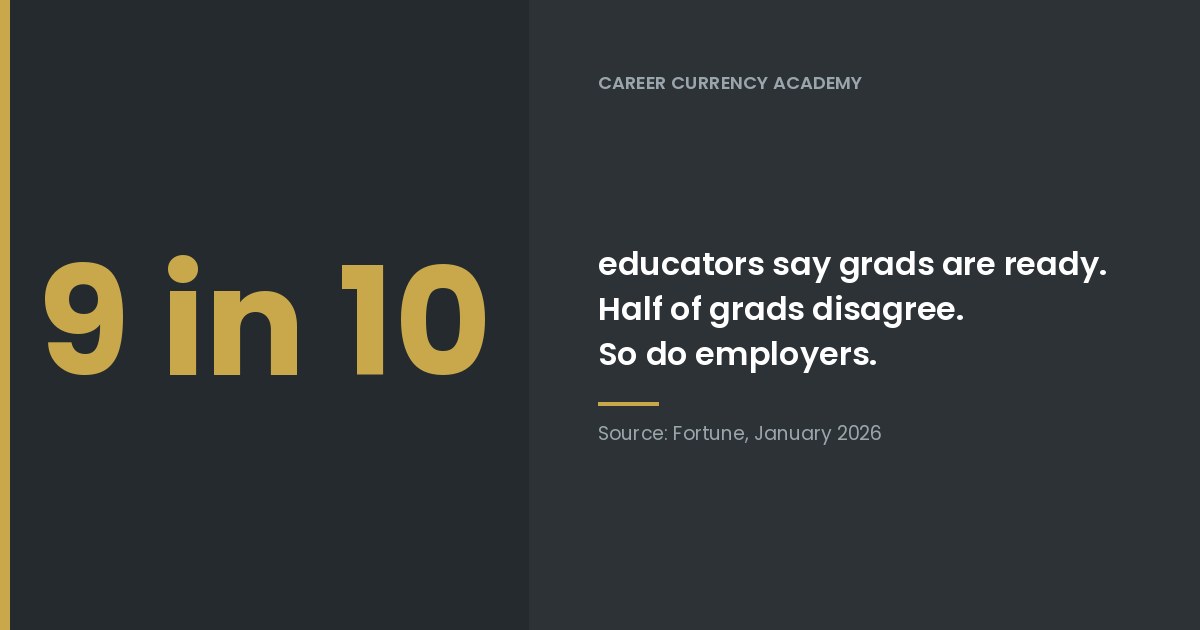
In January, Abbott’s head of HR wrote a piece for Fortune that put the graduate readiness problem into three numbers.
Nearly half of graduates say they feel unprepared for entry-level jobs in their own field. One in six hiring managers hesitates to hire a recent graduate, citing missing workplace skills like teamwork and communication. And nine in ten educators say their graduates are ready.
Somebody is wrong there, and it isn’t the students or the employers. Colleges are grading academic performance and reporting it honestly. Employers are grading something else entirely, and nobody ever handed students the second rubric.
The article points at two accelerants. The pandemic stripped years of formative in-person experience out of a generation’s education. And the entry-level roles that used to teach the basics, the data pulls and the first drafts and the report writing, are the exact roles being automated first. So the traditional on-ramp is narrowing at the very moment students are least prepared to run at it.
The practical read for parents is this. Your student’s transcript isn’t lying to you; it’s just measuring one thing. The second scorecard, the one employers use, gets built somewhere other than a classroom: in a job, an internship, a research role, a real project with real stakes and a real adult watching how it goes.
If your student is graduating with a strong GPA and no evidence they can work with people, they’re the exact profile that one in six hiring managers is hesitating over.
Fix the evidence problem before graduation, not after.
Career Currency Academy builds the second scorecard employers actually grade.
See the Full System